
Why Indoor Pickleball Is Better for Skill Development
Improving at pickleball requires more than just time on court. It requires consistency, quality repetitions, and environments that allow players to focus on decision-making rather than variables outside their control.
For many players, especially in Washington State, indoor pickleball offers a more effective setting for skill development than outdoor play alone. This is not about replacing outdoor courts. It’s about understanding how environment influences learning and long-term improvement.
Skill Development Depends on Consistency
Skill development in pickleball is built through repetition under similar conditions. When court variables change from game to game, progress becomes harder to measure.
Indoor pickleball provides:
Consistent court surfaces
Predictable lighting
Stable temperatures
Reliable scheduling
These factors allow players to focus on mechanics, positioning, and strategy without adjusting to wind, glare, or damp surfaces. Over time, that consistency accelerates learning.
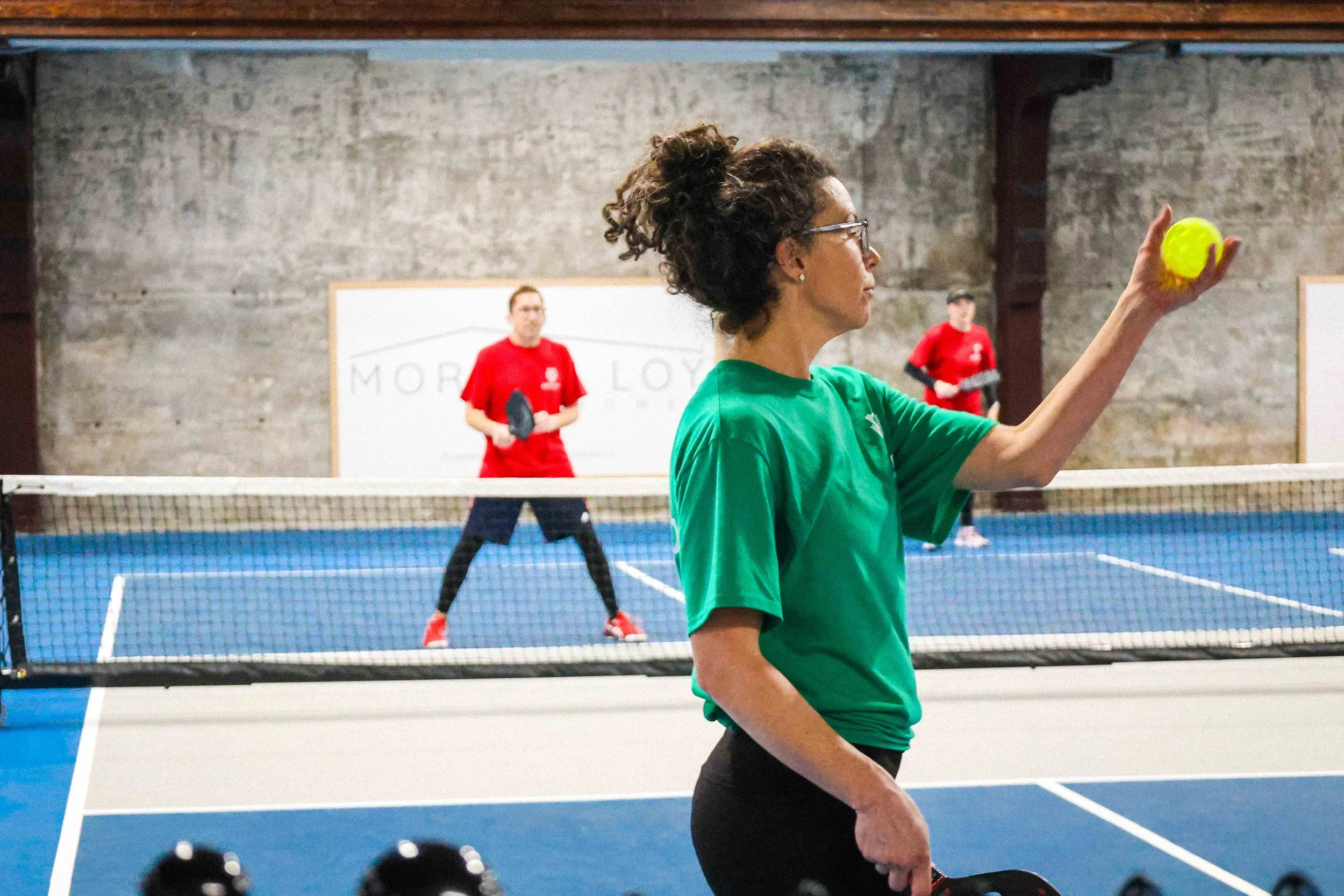
Controlled Conditions Improve Shot Quality
Outdoor conditions often force players to compensate. Wind affects dinks and lobs. Sun glare disrupts tracking. Cold temperatures change ball behavior.
Indoor courts remove those variables. As a result, players can:
Develop touch and soft game control
Practice resets and drops with accuracy
Improve footwork and balance
Make cleaner contact more often
When shots behave the same way every session, players receive clearer feedback about what is working and what is not.
Consistent conditions make improvement measurable, not guesswork.
Indoor Play Supports Intentional Practice
Unstructured play has value, but improvement tends to stall without intention. Indoor pickleball facilities are better suited for structured formats that support skill growth.
These include:
Skill-based leagues
Ladder systems
Organized open play by level
Scheduled drills or clinics
Having set times and defined formats helps players show up with purpose. Instead of reacting to random matchups, players engage in games designed to challenge their current skill level.
Better Matchups Lead to Faster Improvement
One of the biggest barriers to improvement is mismatched play. When skill gaps are too wide, neither player benefits.
Indoor pickleball environments are better equipped to organize play by level. This allows players to:
Face opponents who apply appropriate pressure
Practice shot selection under realistic conditions
Learn patterns that actually translate to competition
Skill-based grouping keeps games competitive without overwhelming players or slowing progress.
Year-Round Play Prevents Skill Regression
In Washington State, outdoor pickleball often slows or stops during fall and winter. Long breaks can lead to regression, especially for newer players.
Indoor pickleball allows players to:
Maintain momentum throughout the year
Build habits through regular play
Progress without seasonal resets
Consistent weekly play compounds improvement over time, which is difficult to achieve when months are lost to weather.
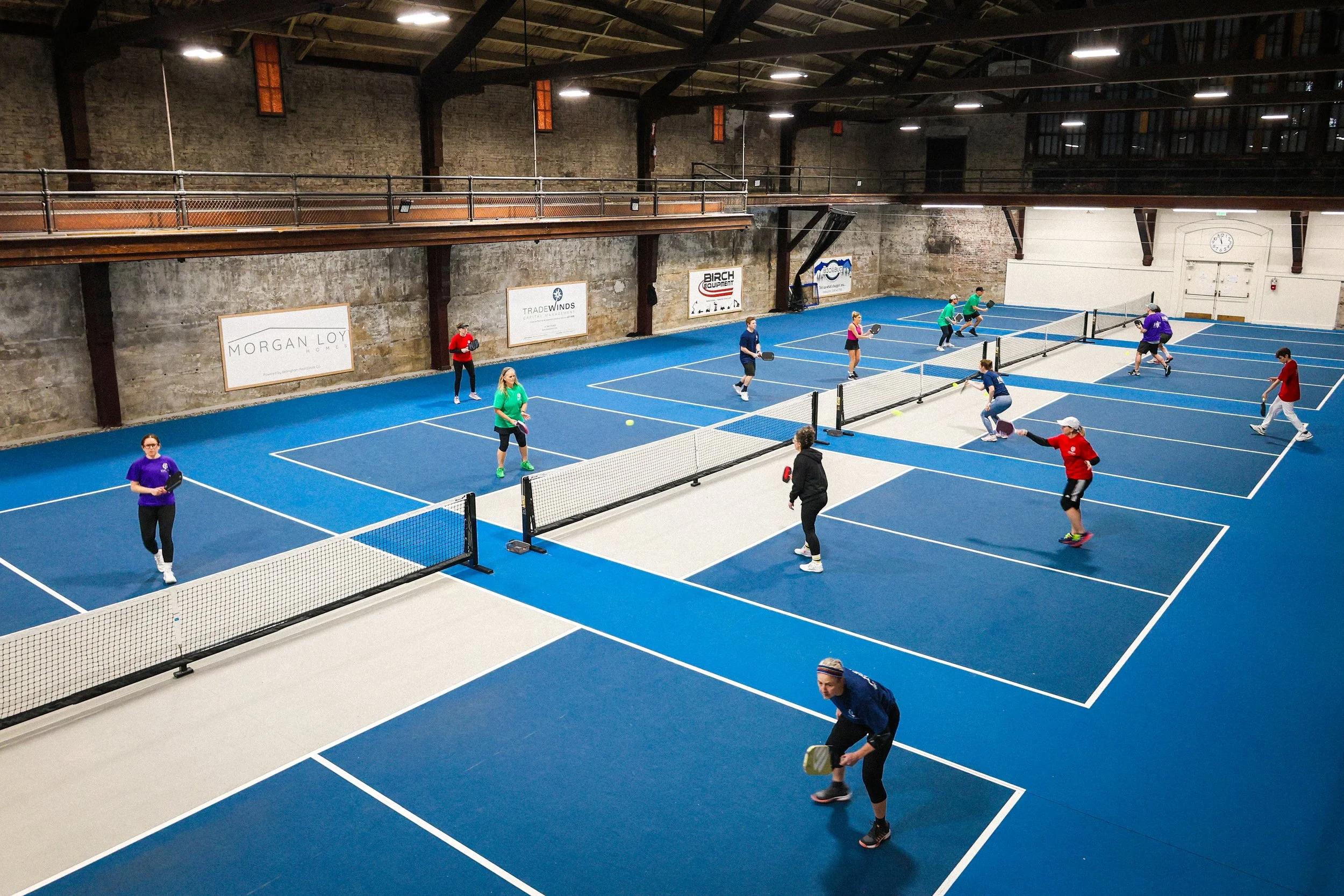
Indoor Facilities Enable Structured Competition
Structured competition is one of the fastest paths to improvement. Indoor facilities make it easier to support leagues, standings, and team formats that create meaningful match pressure.
That pressure forces players to:
Make decisions faster
Adapt to opponents
Learn from mistakes in real time
Competition within a controlled environment produces clearer learning signals than casual play alone.
How Indoor Pickleball Fits Into Long-Term Growth
Outdoor pickleball remains an important part of the sport’s culture and accessibility. Indoor pickleball complements it by offering stability, structure, and opportunities for focused development.
For players serious about improving, indoor play provides:
Consistency that supports skill-building
Organized formats that promote growth
Environments designed for learning, not adaptation
As pickleball continues to grow, indoor facilities will play an increasingly important role in helping players progress from casual participation to confident, skilled play.
The environment matters. And for skill development, indoor pickleball offers advantages that are hard to replicate anywhere else.
